In most of the country the porch is an afterthought—a narrow strip of concrete with a couple of chairs and a welcome mat. In Charleston it is often the best room in the house.
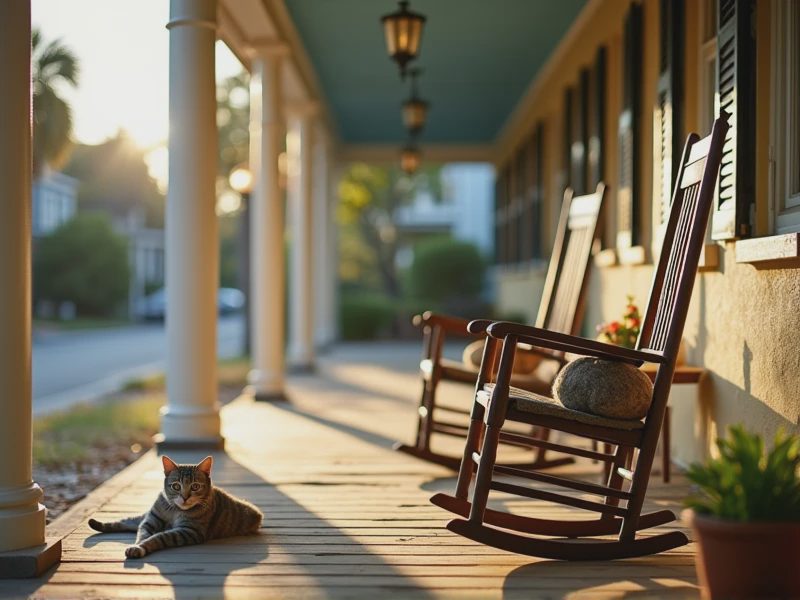
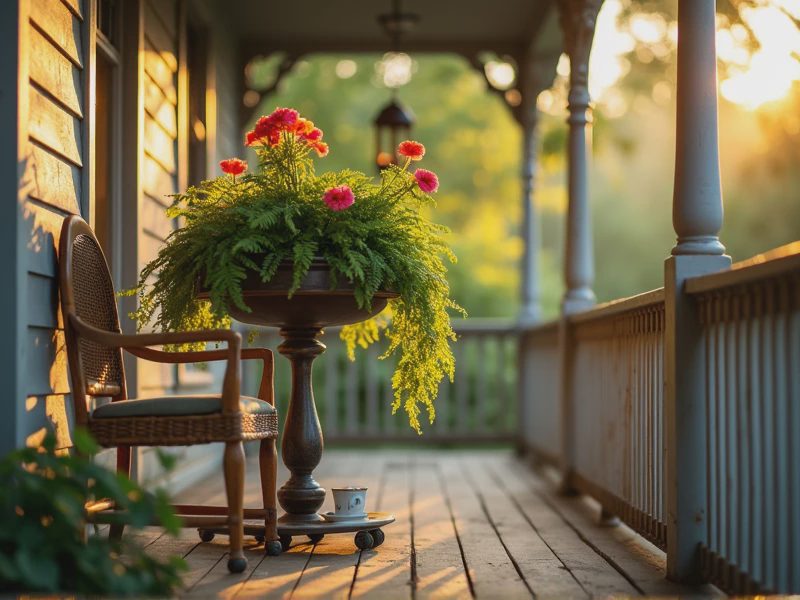
Ours faces a quiet side street in Harleston Village. The floorboards are worn smooth. The ceiling is painted the soft blue that old Charlestonians still call “haint blue,” though I mostly love it because it makes the light feel cooler in July. There is a ceiling fan that clicks softly on the third rotation, two rocking chairs that have known better days, and a small table that holds whatever book I’m currently abandoning and a glass of tea that sweats through the afternoon. Fig claims the sunny patch by the railing. Lily brings her coloring books out here when the house feels too quiet. James and I sit here after she is asleep and talk about nothing important.
This is not outdoor furniture arranged for a photograph. This is a room with no walls that still manages to hold us.
The porch as threshold
A Charleston porch is neither fully inside nor fully outside. That in-between quality is its power. You are sheltered from the rain and the worst of the sun, yet the air still moves. You can hear the street, the church bells, the occasional carriage horse, without being on display. Hospitality in the Lowcountry has always begun at the threshold. The porch is where you receive people before you decide whether to let them further in. It is also where you go when you need to leave the house without actually leaving.
I have watched clients spend tens of thousands on living rooms that still feel stiff, then discover that the place everyone actually gathers is the porch with the slightly peeling paint and the mismatched cushions. The room that works is the one that asks almost nothing of you except that you show up.
Light and air as materials
In the Lowcountry the light is a design element you cannot ignore. It is strong, shifting, and often humid. A good porch understands this. Deep overhangs keep the summer sun from beating directly on the windows behind. The height of the ceiling lets hot air rise. The open railings (or the more private lattice on some of the older houses) control how much of the street you invite in.
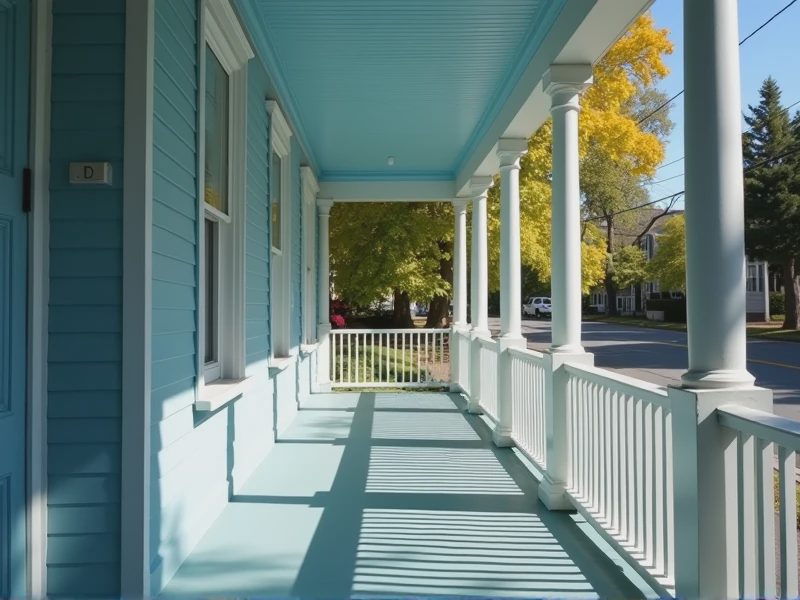
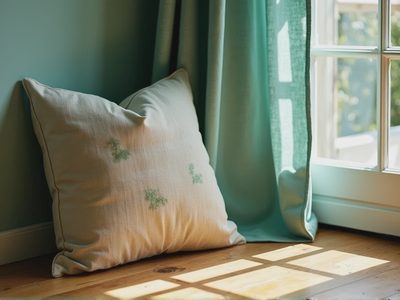
When I am specifying curtains for the rooms that open onto a porch, I think about the porch first. The fabric inside has to negotiate with the light that has already been softened by the overhang and the painted ceiling. A heavy formal drape can feel wrong when the real living is happening just beyond the threshold in a rocking chair. Lighter linens, soft cottons, and the occasional breezy sheer tend to make more sense. They continue the conversation the porch has already started.
Soft furnishings for a room without walls
Porch textiles have to be tougher than indoor ones, but they do not have to look it. I am partial to solution-dyed acrylics that feel surprisingly like cotton, and to outdoor performance fabrics that have finally learned some manners. Cushions should be deep enough to sink into. Throws are useful even in Charleston—the evenings can cool quickly after a storm. I keep a basket of them by the door so they can migrate in and out without ceremony.
The goal is the same as any other room: layers that invite touch and use. A porch that is too carefully styled feels like a stage set. A porch with a faded cushion, a book left open, and a child’s drawing weighted down by a shell feels like it belongs to the people who live there.
Why it still matters
We spend so much time making the interior rooms perfect that we forget the oldest lesson these houses teach: the best space is often the one that lets the world in a little. The porch does not demand that you perform. It does not require the right shoes or the right conversation. It simply offers shade, air, and a place to sit while the day changes around you.
When clients ask me where to begin if they want their house to feel more like a home and less like a project, I sometimes walk them straight outside. Sit here for twenty minutes, I tell them. Notice what the light is doing. Notice how the air moves. Then go back inside and ask every room whether it offers even a fraction of that ease.
Most of the time the answer is no. And that is where the real work begins.
A soft room is a room that breathes.
Some of the softest ones have no walls at all.
— Caroline