
There is something wonderfully human about lowering a needle, hearing that tiny pop, and letting music fill the room. A record player table gives that ritual a proper home, but the best one does more than hold a turntable. It tucks away records, leaves room for a lamp or stack of favorites, and looks comfortable beside the rest of your furniture. Think of it as a small piece of architecture for everyday pleasure, not a black box dropped into the corner.
In my own living room, the listening area sits near a tall window with a linen chair, a basket for throws, and a low oak cabinet. It is not perfectly styled. Fig the cat has tested one corner, and Lily has left crayons on the lower shelf more than once. That is exactly why scale, finish, and storage matter. A record player table should support real life while making the room feel a little more considered.
Start with the equipment and the wall
Before falling for a beautiful cabinet, measure everything you already own. Write down the width and depth of the turntable, speakers, receiver, and any accessories. A compact setup might fit on a surface 36 inches wide, while larger stereo components can need 48 inches or more. Leave several inches behind the equipment for cables and airflow, especially if an amplifier sits inside the cabinet.
A record player table generally works best when its top is around the height of a console or media cabinet, usually between 28 and 34 inches. That height keeps the controls easy to reach without making the turntable feel like a display pedestal. Check the wall behind it, too. A narrow apartment nook may need a shallow cabinet, while a long living-room wall can handle a wider walnut piece with closed storage.
Do not forget the listening position. Speakers need enough separation to create a balanced soundstage, and they should not be squeezed into a cabinet cubby unless the manufacturer allows it. If your speakers are separate, let the table hold the turntable and records while placing the speakers on sturdy stands or nearby shelves.

Choose storage that earns its footprint
Vinyl is beautiful, but it is also heavy. A collection of 50 records can weigh roughly 35 to 40 pounds, so flimsy particleboard shelves will eventually bow. Look for a record player table with a reinforced center, solid framing, or shelves designed to carry substantial weight. Adjustable shelves are especially helpful if you store sleeves, cleaning supplies, headphones, or a small receiver together.
Closed doors are a gift in a family room. They protect records from dust and keep visual noise under control when toys, mail, and school papers begin migrating across every flat surface. Sliding doors suit a midcentury room and save clearance, while hinged doors offer easier access but need room to swing. Open cubbies are convenient, though they can make a collection look busy unless you keep the contents edited.
For a smaller collection, one lower shelf and a drawer may be plenty. For a serious archive, consider a wider console or separate record storage beside the turntable. Trying to force 300 albums into one petite cabinet usually creates sagging shelves and a top crowded with equipment.
Let the finish connect to the room
The finish should relate to something already present rather than match every wood tone exactly. A walnut record player table can warm up a room with ivory upholstery, brass lighting, and faded blue textiles. Oak feels lighter and more casual, especially in a coastal or Scandinavian-inspired space. Painted furniture can be charming in a bedroom or cottage setting, but inspect the hardware and interior finish before buying.
I am partial to natural wood with a soft, low-sheen finish. It shows a little life, hides fingerprints better than high gloss, and becomes more handsome as the room settles around it. If you have young children, avoid a sharp glass top and look for softened corners. A rounded edge will not make the cabinet indestructible, but it is kinder when someone rushes past with a basket of laundry.
Metal legs can make a cabinet appear lighter, while a plinth base gives it a grounded, substantial feeling. Use the surrounding furniture as your guide. If the sofa and coffee table are visually heavy, raised legs can keep the corner from feeling dense. If the room already has many slender pieces, a solid base may provide welcome weight.
Make the listening corner feel intentional
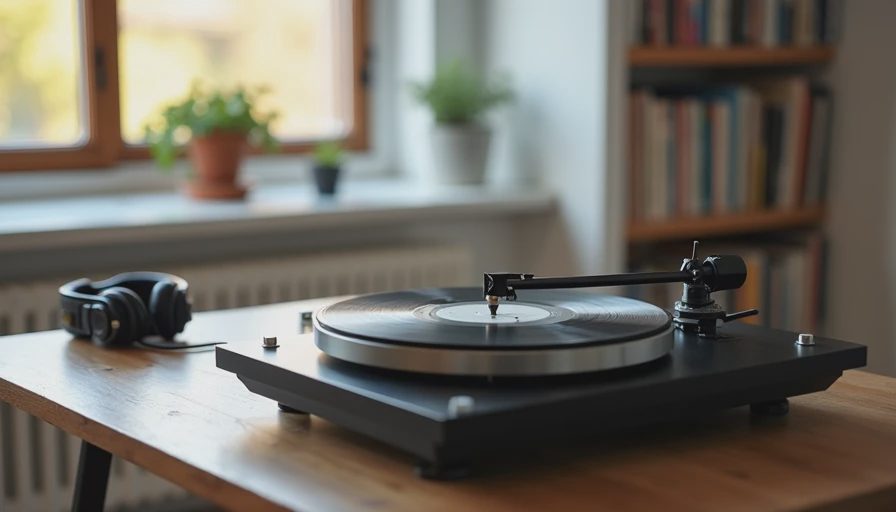
A record player table looks most at home when it has a little breathing room. Give it at least a few inches on each side, then add one soft element nearby: a woven basket, upholstered stool, or fabric-covered chair. This keeps the setup from reading like an electronics station. A small framed print above the cabinet can work, but leave enough clearance to lift the dust cover without bumping the artwork.
Lighting matters more than people expect. A petite table lamp creates a warm pool of light for sorting albums at night. Choose a fabric shade if the room needs softness, or a simple ceramic base if there is already plenty of pattern. Avoid placing a lamp cord directly across the turntable area; route it behind the cabinet with a cable clip or discreet cord channel.
You can also use the top for a small stack of current favorites, a shallow bowl for cleaning brushes, or one vase of leafy branches. The key is restraint. The record player is the star, and every extra object should help the ritual rather than compete with it.
Solve the practical details before they become annoying
A record player table should sit on a level, stable surface. Wobbly legs, a sloping floor, or a cabinet that flexes when you touch it can affect playback and make the whole experience frustrating. Felt pads can protect hardwood floors, while adjustable feet help with older homes where floors are rarely perfectly even.
Plan cable paths before pushing the cabinet against the wall. Power strips should remain accessible, and ventilation openings should never be blocked by records or fabric baskets. If your setup includes a receiver, check its clearance requirements. Heat trapped inside a closed cabinet can shorten the life of electronics.
Dust is another quiet consideration. Keep a microfiber cloth and record brush in the cabinet, not across the room. Clean records with the appropriate brush before playing, and keep sleeves upright rather than leaning at a sharp angle. These small habits protect both the collection and the calm feeling you wanted in the first place.
Shop with a real-life checklist
When comparing a record player table, begin with five questions. Does the surface fit the equipment with room for cables? Can the shelves support the weight of the records? Does the door or drawer open without hitting nearby furniture? Is the finish durable enough for fingerprints, dust, and an occasional cup set down too quickly? Finally, can you picture living with its proportions after the novelty wears off?
A budget cabinet under $200 can work well for a simple setup, particularly if you reinforce a shelf and confirm its measurements. Pieces in the $300 to $700 range often offer better hardware, stronger joinery, and more thoughtful cable management. Vintage furniture can be wonderful, but inspect it for odors, unstable legs, and shelves that were never designed for vinyl.
The right record player table will not make your room feel like a showroom. It should make it easier to listen, easier to tidy, and more pleasant to pause beside on an ordinary Tuesday. Choose the one that supports your equipment, respects your storage needs, and brings a little warmth to the corner. A soft room is a room that breathes. Let yours exhale.