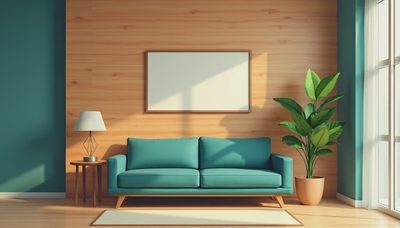
A boho living room should feel collected, comfortable, and a little bit unexpected. Picture sunlight moving across a woven rug, a linen pillow slightly rumpled from yesterday's nap, and a basket that actually holds the toys instead of simply looking pretty beside them. The best boho living room is not a theme park of tassels. It is a layered space with personality, softness, and room for real life.
I love this style because it welcomes the imperfect corner. A thrifted stool can sit beside a tailored sofa. A treasured travel textile can share space with a washable throw. You do not need to buy everything at once, and you certainly do not need a matching set. Begin with the feeling you want, then build slowly around it.
Start with a calm, useful foundation
Before adding pattern, choose the pieces that will carry everyday life. A cream, camel, oatmeal, or warm gray sofa gives a boho living room a quiet base, while a shape with deep cushions invites people to sit rather than admire it from across the room. If you have children or pets, look for a tightly woven performance fabric, a removable slipcover, or a sofa in a medium value that will not reveal every crumb.
I would rather see one well-proportioned sofa than three small pieces that make the room feel busy. Measure the wall, doorway, and walking paths before ordering. Leave about 30 to 36 inches for a comfortable main walkway when the layout allows it, and keep the coffee table close enough to reach without leaning forward like you are boarding a boat.
For a coffee table, try wood, rattan, or an aged finish with a little visual weight. Round or oval edges are especially kind in a family home because they soften traffic around corners. The foundation should feel steady; the accessories can do the wandering.
Layer texture before you add more color
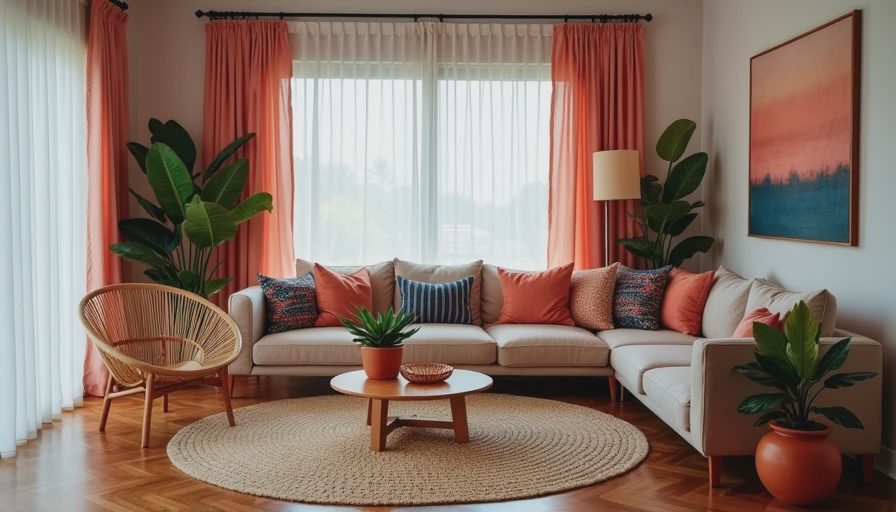
Texture is what keeps a boho living room from becoming flat. Start with a rug that gives the seating area a clear center. A wool rug feels wonderful underfoot, while a cotton dhurrie or low-pile washable rug is easier beneath snack time and muddy shoes. In a small room, choose a size that allows at least the front legs of the sofa and chairs to rest on it. A rug floating in the middle usually makes the furniture look disconnected.
Next, mix surfaces rather than stacking the same material everywhere. Pair a nubby linen pillow with smooth cotton, a leather accent with a chunky knit, and a woven basket with a ceramic lamp. Natural texture works best when it is repeated two or three times, not copied in every corner. Think cane chair, jute basket, and woven shade; then let the rest of the room breathe.
A little pattern is welcome. Try a small stripe, a faded medallion, or a block print in rust, indigo, olive, or clay. Keep one color moving through several textiles so the room feels related instead of random.
Choose furniture with a story and a job
The furniture in a boho living room should not look as if it arrived in one delivery. Combine a simple upholstered sofa with a vintage-inspired wood chair, a small leather pouf, or a painted side table. The contrast gives the room its relaxed confidence. If every item is pale and delicate, the space can feel washed out; add one darker element, such as walnut, charcoal, or aged brass, to anchor the composition.
A low ottoman can serve as a footrest, extra seating, and a place to put a tray when friends come over. Choose a flat, stable tray rather than balancing drinks directly on fabric. For a family, I like nesting tables because they can spread out during guests and tuck away when Lily is building an elaborate block city on the floor.
Do not force symmetry. A lamp on one side and a plant stand on the other can feel more natural than two identical tables. Balance comes from visual weight, color, and height, not from purchasing pairs.

Let lighting create the evening mood
Good lighting makes a boho living room feel finished after sunset. One ceiling fixture is rarely enough. Add a floor lamp beside the sofa, a table lamp on a console, or a plug-in sconce near a reading chair. Warm bulbs in the 2700K range generally create a softer residential glow than cool daylight bulbs, which can make linen and wood look harsh at night.
Use shades to introduce another layer of texture. A woven shade casts a gentle pattern, while linen gives a quieter, more tailored effect. Put lamps at different heights so the eye moves around the room. A room with only low light can feel sleepy; a room with only overhead light can feel like a waiting room. The mix is what makes it welcoming.
Candles are lovely, but they are not required. A small rechargeable lamp on a stack of books can provide the same intimate pool of light without adding another cord or open flame near curious hands.
Make the room practical without losing its soul
A boho living room can be beautiful and forgiving. Choose pillow covers with zippers so they can be washed, and keep a spare cover for the one that meets tomato sauce first. Performance velvet can be surprisingly practical because its dense pile resists many everyday marks, while loose bouclé may be less friendly to claws and crumbs. The right choice depends on how your household actually uses the room.
Use baskets where clutter happens naturally. Place one near the sofa for blankets, one near the entry for shoes, or a lidded basket beside a media console for small toys. This is not about hiding every sign of living. It is about giving the ordinary things a handsome home.
For a cat, provide an approved scratching surface near the furniture you want to protect. For children, anchor tall bookcases and avoid heavy objects on high shelves. Practical planning is not separate from design; it is what allows the pretty parts to survive.
Finish with collected details, not clutter
The final layer in a boho living room should tell us something about the people who live there. Hang an oversized textile, frame a child's drawing, or display a small group of handmade pottery. Three related objects usually read more clearly than ten scattered ones. Leave some wall and tabletop space empty so the meaningful pieces have room to register.
Plants bring softness and height, but choose varieties that suit your light and routine. A sturdy snake plant or pothos can be more successful than a dramatic plant that needs constant attention. Add one tall plant in a corner, one smaller plant on a table, and stop there until you see how the room feels.
Stand in the doorway before you buy anything else. Notice where your eye lands, where the room feels heavy, and where it needs a little warmth. A soft room is a room that breathes. Let's make yours exhale.