
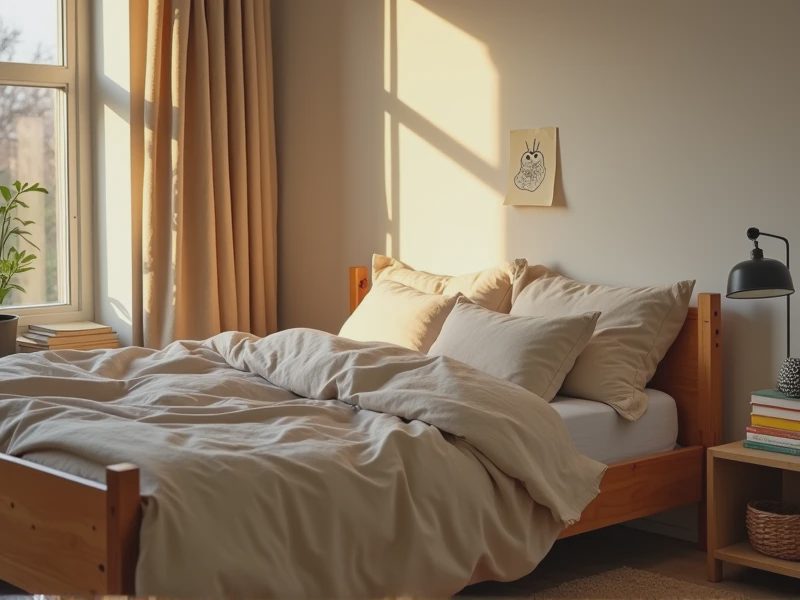
The nursery was soft and temporary on purpose. Pale walls, a crib that converted, curtains that filtered the light without trying to make a statement. It was designed for a baby who would not stay a baby. When Lily started talking about “my big-girl room,” I knew the space had to grow up with her instead of being replaced overnight.
We did not gut it. We let it evolve over two years, one decision at a time, until the room that had held a changing table now holds chapter books, a reading corner, and a bed she can make herself.
What we kept
The light was always the best thing about the room. East-facing, clear in the morning, gentle by the afternoon. We kept the curtains—simple linen panels hung high and wide—and only changed the hardware when the original rod started to feel too delicate for a child who likes to pull them open with both hands. The walls stayed the same quiet warm white. There was no need to repaint just to mark a milestone. The architecture was already doing its job.
The rug stayed too, though it has taken more punishment than I originally planned for. It anchors the floor and softens falls. When it eventually needs replacing, that will be a reasonable cost of a room that is actually used.
What changed
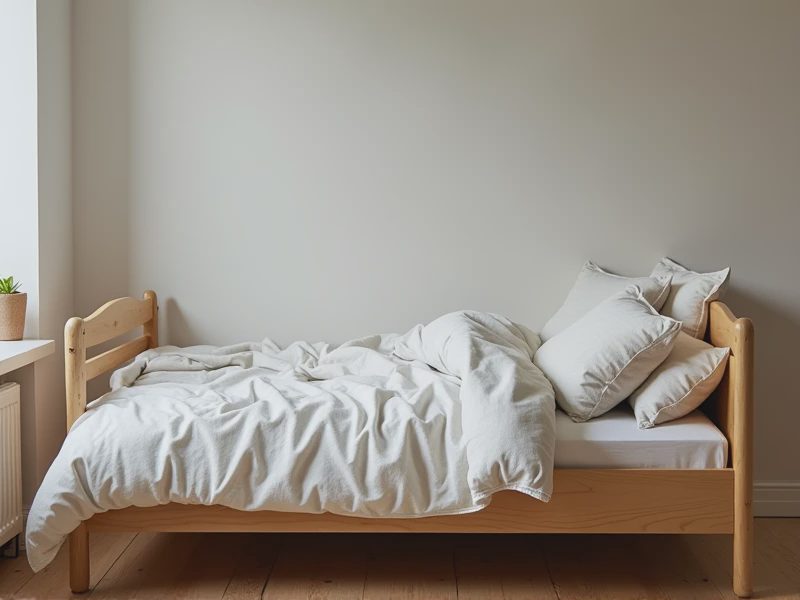
The crib became a real bed. We chose a simple wood frame with a headboard low enough for her to feel secure and high enough to feel intentional. The bedding shifted from crib sheets to a washable linen-cotton mix she can manage. One fitted sheet, one light duvet with a cover she helped pick, two pillows. Nothing that requires an adult to finish. The act of making the bed became part of the room’s daily rhythm rather than a performance I did for her.
Storage had to grow up. Open baskets and low shelves replaced the tall changing dresser. She can reach what she needs and put things back without calling for help. The system is not always tidy. It is, however, usable by the person who lives there. That felt more important than visual perfection.
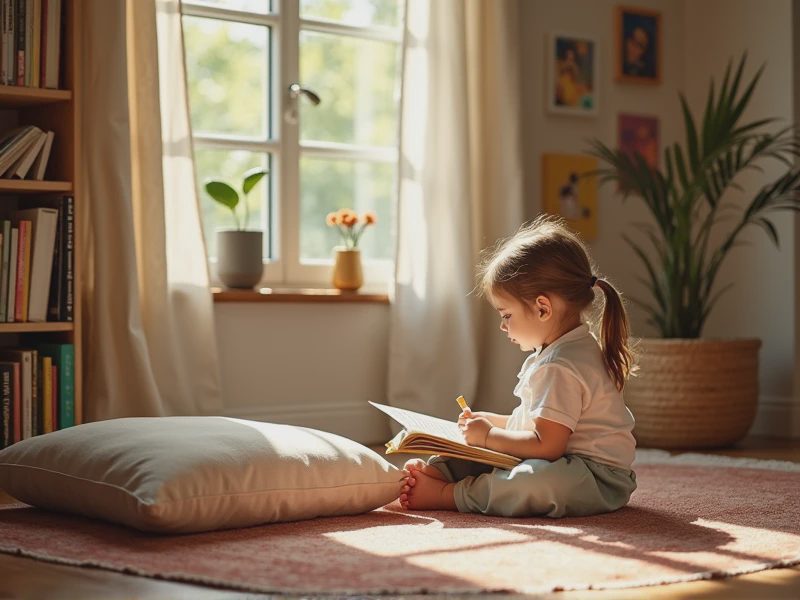
We added a small reading corner by the window: a low upholstered chair, a floor cushion, and a narrow shelf for the books that matter right now. The chair is covered in a performance fabric that still feels soft. It has already survived snack time and more than one art project. I would rather replace a cover later than teach her that the nicest seat in the room is off-limits.
The soft-furnishing decisions that mattered
Scale was everything. Adult proportions would have made her feel like a visitor in her own space. Child-only proportions would have made the room feel temporary and slightly dismissive. We aimed for pieces she can grow into for a few more years without looking like she is living in borrowed furniture.
Fabric choices stayed honest. Everything that gets touched daily can be cleaned. Nothing is so precious that play has to stop when it appears. At the same time, I refused the bright, primary-colored textiles that would have made the room scream “child’s room” from the hallway. Soft patterns, quiet colors, and textures that feel good against skin keep the space connected to the rest of the house. When the door is open, it still feels like part of the same home.
The curtains continue to do architectural work. They filter the strong morning light, give the window a finished edge, and can be opened wide enough that the room expands into the day. A blackout option exists for early summer mornings, but it is secondary. We wanted the light more than we wanted total control of it.
What the room feels like now
It is not a showroom version of a little girl’s room. There are drawings on the wall that she taped up herself. The bed is sometimes made with care and sometimes made in a hurry. The reading chair often has a blanket on the floor beside it. Fig has claimed a corner of the rug. None of that undermines the room. It confirms that the room is doing its job.
When I stand in the doorway at the end of the day, it no longer reads as a nursery that has been asked to pretend. It reads as a place that has been allowed to keep pace with the person who sleeps there. The transition did not require a dramatic reveal. It required patience, a few clear soft-furnishing decisions, and the willingness to let the room change at the speed of a child rather than the speed of a project.
A soft room is a room that breathes.
The best ones grow without needing to be replaced.
— Caroline