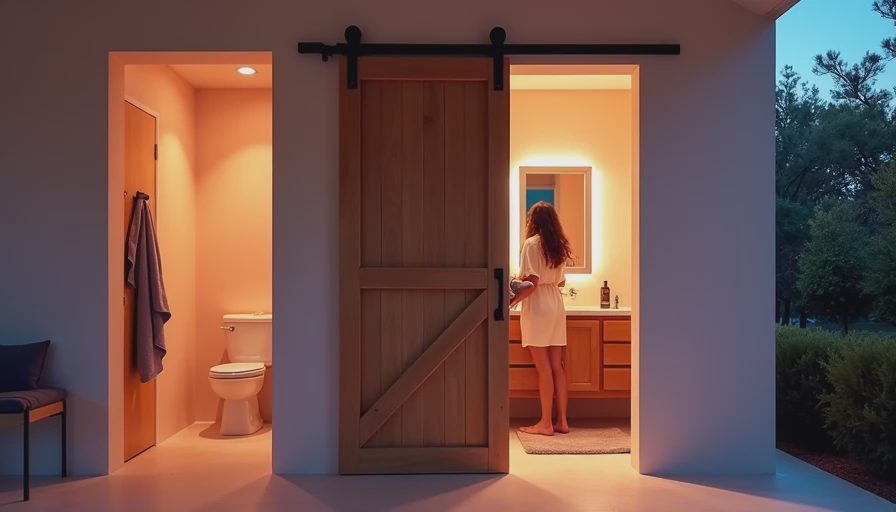
A barn door for bathroom spaces can be one of those decorating decisions that looks charming in a photograph and feels surprisingly practical at home. It saves swing space, adds architectural character, and gives a small room a little more presence. But bathrooms are private, humid, hardworking rooms, so the pretty door needs to do more than look good. It should slide smoothly, close securely, and suit the way your household actually moves through the day.
I love the idea when it is treated as part of the room, not as a last-minute piece of farmhouse decoration. In our Charleston house, every inch matters, and a door that slides beside the wall can make a narrow hallway feel much calmer. The trick is choosing the right material, track, and level of privacy before you fall for a particular finish.
When a sliding bathroom door makes sense
The strongest reason to choose a barn door for bathroom use is clearance. A standard hinged door needs room to swing into the bathroom or hallway, which can interfere with a vanity, toilet, laundry basket, or a child dashing through in a hurry. A sliding panel stays against the wall, often freeing up several square feet of usable floor area.
This arrangement works especially well for a powder room tucked beneath stairs, a primary bath with a tight dressing area, or a guest bath opening onto a narrow corridor. It can also make an awkward renovation feel intentional. Instead of moving plumbing or rebuilding a wall, you may be able to improve the layout with a surface-mounted door.
There is one important practical limitation: a sliding door does not seal like a hinged door. Sound and light can pass around the edges, and the panel needs enough clear wall beside the opening to slide fully out of the way. For a shared family bathroom, consider whether someone will need quiet privacy while another person is getting ready nearby. A powder room is usually the easiest and happiest application.
Choose the panel with moisture in mind
A bathroom is not the place for a delicate reclaimed board with flaking paint and unknown finishes. Humidity, splashes, and regular cleaning can cause untreated wood to swell, stain, or develop rough spots. If you want the warmth of wood, look for a sealed solid-wood panel, a painted engineered-wood door, or a moisture-resistant composite designed for interior use.
A classic paneled door painted warm white feels at home in a traditional house. Natural oak brings a softer, more modern note, especially beside white tile and aged brass. For a darker room, a muted blue-gray or deep green can make the door feel considered without turning the bathroom into a theme. I would be cautious with very rustic planks unless the rest of the room has enough texture to support them; otherwise, the door can look like it wandered in from a restaurant renovation.
Glass is another possibility. Frosted or reeded glass lets daylight move through a dim hallway while preserving visual privacy. Clear glass is generally better suited to a closet or pantry than a bathroom. If you choose glass, use a panel made for interior door applications and pair it with a sturdy frame. A barn door for bathroom installation should feel solid when you touch it, not rattly or temporary.
Get the measurements right before shopping
Measure the finished opening, not just the old door slab. The sliding panel should be wider than the doorway so it covers the opening when closed. Many homeowners allow at least 2 inches of overlap on each side, although the exact amount depends on the hardware and wall conditions. The panel also needs to be tall enough to cover the opening without leaving an obvious gap at the top.
Next, measure the wall beside the opening. You need a clear stretch long enough for the door to slide completely away, with no light switches, thermostat, towel hooks, artwork, or trim in its path. A barn door for bathroom layouts often requires more wall space than expected because the panel itself is usually wider than the opening.
Check the header, too. A heavy door and steel track need secure attachment to framing or a properly installed mounting board. Drywall alone is not enough. If you cannot locate studs, a carpenter can add a support board that spans them and gives the track a reliable base. This small structural step prevents sagging, loose hardware, and the unnerving thump of a door pulling away from the wall.
Privacy hardware is not optional
A regular barn door pull is easy to install, but a bathroom deserves a real privacy latch. Look for a hook-and-eye latch, sliding bolt, or purpose-made barn-door privacy lock that can be operated from inside and released in an emergency. The hardware should hold the panel close to the jamb without forcing it against the wall.
A floor guide is equally important. It keeps the bottom of the panel from swinging when someone opens or closes it, which is particularly helpful in a busy family bathroom. Soft-close hardware can prevent slamming and make the whole installation feel more refined. If Lily is coloring nearby while I am trying to get ready, that quiet closing motion is worth every extra dollar.
For a barn door for bathroom privacy, pay attention to the gaps. A slim gap can look neat, but a wide opening around the panel undermines the purpose of closing the door. Use a jamb or side trim where appropriate, and ask the installer how the chosen hardware handles the relationship between the panel and the wall.

Match the style to the rest of the room
The best barn door for bathroom design does not have to announce itself as a barn door. In a historic home, a five-panel painted door with simple black hardware can echo the home's original trim. In a contemporary space, a flat-front walnut panel and streamlined stainless track may look cleaner than farmhouse-style X bracing.
Think about the materials already in the room. A brass faucet can welcome warm oak or a creamy painted finish. Matte black lighting can support charcoal hardware, but using black on the door track, mirror frame, and cabinet pulls may feel more cohesive than adding one isolated black detail. If the bathroom has patterned wallpaper, keep the door quiet. If the room is mostly white, a paneled or textured door can provide the visual interest.
Scale matters as much as color. A very thick, dark door can overpower a petite powder room, while a narrow lightweight panel may look insubstantial beside tall millwork. Bring a paint sample, tile sample, or photograph of the vanity when shopping. The right choice should connect the room rather than compete with it.
Budget and installation decisions
Prices vary widely, but a basic unfinished panel and hardware kit can begin around $200 to $400. A finished wood door, quality track, privacy latch, floor guide, and professional installation can bring the total closer to $800 to $1,800. Custom work, glass, unusual openings, and structural repairs can push the investment higher.
Do not spend the whole budget on the door and then use flimsy hardware. The track carries the weight and determines how quietly the panel moves. Choose a kit rated above the door's actual weight, confirm that the rollers are appropriate for the panel, and make sure the stop positions can be adjusted. A contractor can usually install a straightforward setup in a few hours, but wall repairs and framing changes add time.
Before ordering, ask whether the kit includes the mounting board, spacers, stops, floor guide, pulls, and fasteners. Some attractive online packages include only the track and rollers. That surprise can turn a $350 project into a frustrating series of hardware-store trips.
A simple way to make the final choice
Start with the bathroom's job. For a rarely used powder room, you can lean more decorative. For a shared bath, prioritize privacy, quiet operation, and a durable finish. Then confirm the wall length, locate the studs, and measure the finished opening twice. Those three steps will eliminate most expensive mistakes.
After that, choose the mood. A painted panel feels classic and forgiving, natural wood feels warm, and reeded glass feels airy. Keep the hardware proportional and select a latch that genuinely works from inside the room. The result should make the bathroom easier to use, not simply more photogenic.
A barn door for bathroom spaces can be beautiful, but its charm comes from thoughtful details: a smooth track, a dependable lock, sensible overlap, and a finish that can handle real life. When those pieces are right, the door gives a small room room to breathe. A soft room is a room that breathes. Let's make yours exhale.