
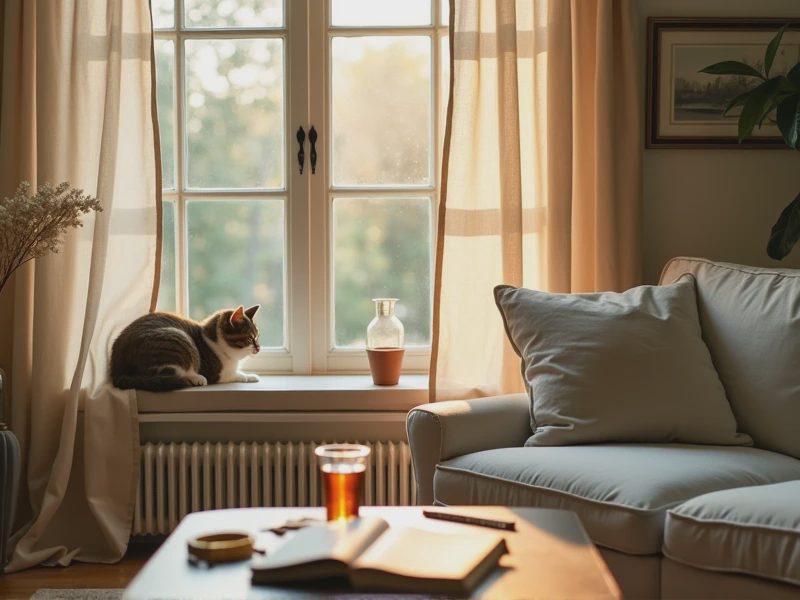
Most people look at a curtain and see fabric hanging from a rod. I look at it and see the entire story of the room: how the light moves, how the window was meant to feel, and whether anyone actually lives here.
You don’t need a tape measure for this. You need a quieter kind of attention. Stand in the doorway, take a breath, and let the curtain tell you what it’s doing.
First: the hang
A good curtain falls the way a good dress does—with weight and intention. Look at the way the fabric meets the floor (or doesn’t).
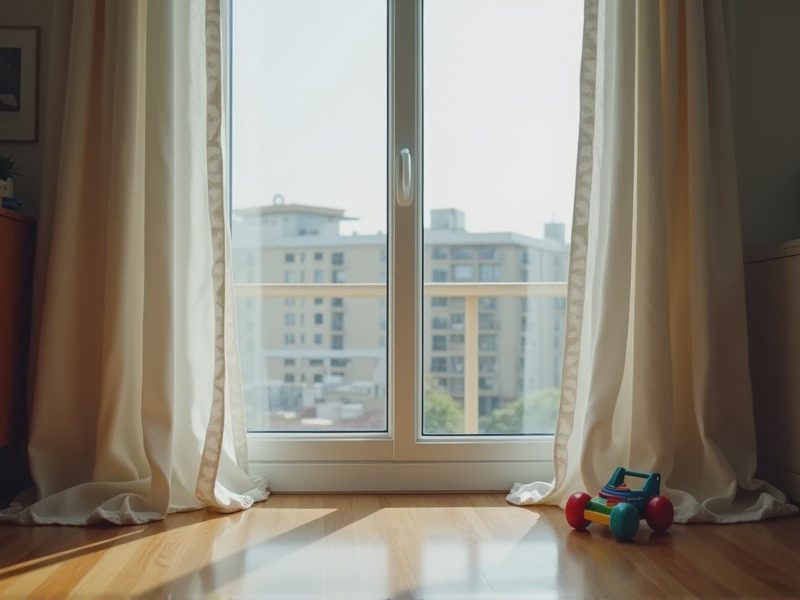
Kissing the floor — the hem just grazes. Clean, intentional, easy to live with. This is what I specify most often in family homes.
Puddling — extra fabric pooling on the floor. Romantic in theory, a dust magnet and a toddler trip hazard in practice. I rarely recommend it unless the room is formal and the traffic is light.
Floating — stopping several inches above the floor. This almost always looks unfinished, like the curtain never quite arrived.
If the curtain is bunched or strained at the top, the hardware is fighting the fabric. If it hangs in soft, even folds, the proportions are working.
Second: the fullness
Fullness is the secret most people never notice until it’s missing. A curtain that is only as wide as the window looks skimpy and hard. A curtain with proper fullness (usually 2 to 2.5 times the width of the rod) creates soft vertical folds that catch light and soften the whole wall.
You can spot inadequate fullness from across the room: the fabric looks flat, the light shows through in harsh rectangles, and the window feels like it’s wearing something two sizes too small. Good fullness makes the curtain look like it belongs to the architecture, not like an afterthought.
Third: the header
How the curtain attaches to the rod changes everything about its personality.
Pinch pleats or French pleats — tailored, structured, quietly formal. They stack neatly when open and hold their shape.
Ripplefold or wave — modern, soft, and continuous. The fabric moves in even undulations.
Grommets or rings — casual and easy. They can look a little hotel-chain if the fabric is too stiff.
Rod pocket — the simplest and often the least forgiving. It can look gathered and sweet, or it can look like the curtain is trying too hard to stay up.
I almost never use a plain rod pocket in a primary living space anymore. It doesn’t give the fabric enough structure to breathe.
Fourth: the light
This is the part that separates a catalog curtain from a real one. Stand in the room at different times of day if you can.
Does the fabric filter the light into something soft, or does it fight it? Sheer or light linen will glow. Heavy velvet will hold the dark and make the room feel enclosed in the best way. A poorly chosen blackout lining can turn a sunny Charleston morning into a cave.
In the Lowcountry we live with intense, shifting light. A curtain that looks perfect at noon can feel heavy and wrong at four o’clock. The best ones change character with the day instead of resisting it.
Fifth: the hand
Walk over and touch it. Seriously. A curtain is a textile first. If it feels stiff, plasticky, or like it will never soften, it will never feel like part of a lived-in room. Linen wrinkles and that’s part of its honesty. A good cotton velvet has weight and a slight give. Performance fabrics have improved dramatically, but many still announce themselves as “practical” before they ever feel soft.
If you wouldn’t want to rest your cheek against it, think twice about hanging it where you live.

What this actually tells you
When a curtain is right, you stop noticing it as an object and start feeling the room differently. The window feels taller. The light feels kinder. The walls soften. You can sit on the sofa without the sense that something is unfinished.
When it’s wrong, the whole room stays a little on edge—too tight, too flat, too eager to impress.
You don’t need to measure to see any of this. You only need to look the way you look at a person you care about: not for perfection, but for whether they seem at ease in their own skin.
Next time you walk into a room, try it. Read the curtain before you read anything else. It will tell you more than the furniture ever could.
A soft room is a room that breathes.
Let’s make yours exhale.
— Caroline