Bookcase lighting can do more than brighten a shelf full of novels. In a real home, it adds depth, cuts that flat built-in look, and makes a room feel finished at night. I love it for the same reason I love a good throw or lined drapery: it softens hard edges. If your shelves hold baby books, framed photos, a few pretty objects, and one or two honest piles, the right glow makes all of it look intentional instead of crowded.
What I tell clients first is simple: do not start by shopping for a fixture. Start by looking at the bookcase itself. How deep are the shelves? What color is the back panel? Are you trying to light a row of books, or are you trying to show off a handful of objects you actually love? Once you answer that, the rest gets much easier. A shelf that is mostly storage needs one kind of light. A shelf that is mostly display needs another. That little distinction saves money and keeps the finished room from feeling overworked.
Start with the shelf, not the lamp
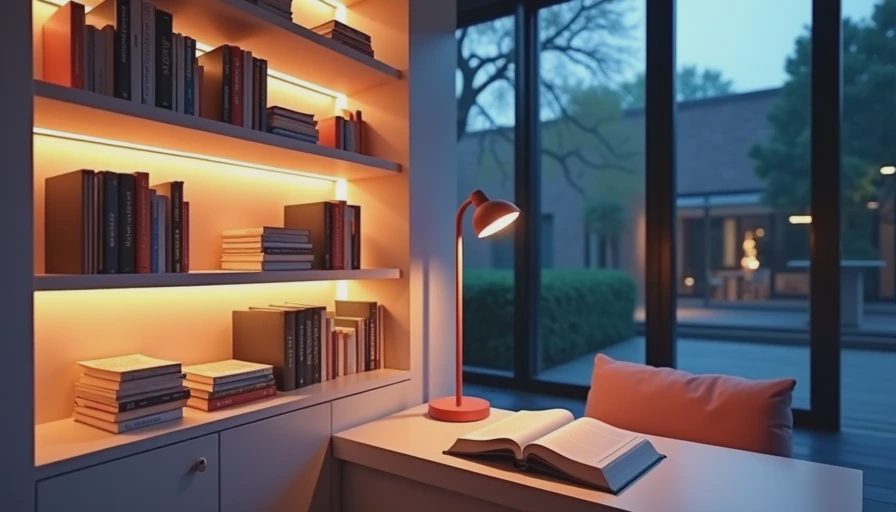
Good bookcase lighting starts with the shelf depth, the trim, and the things you actually store. A 10- to 12-inch-deep shelf can handle a slim LED strip tucked under the front lip, while a shallow shelf often looks best with a tiny puck light or a picture light mounted above. If the bookcase is mostly books, you want a wash of light, not a spotlight. If it is more decorative, aim for pools of light that pull the eye toward one vase, one framed print, or one stack of spines in a color you like. That is the difference between a shelf that reads as clutter and one that reads as collected. In rooms with dark paint, the glow matters even more because shadows swallow detail fast. I also tell clients to look at the back panel. A glossy white back bounces light; a deep navy or walnut panel needs a little more brightness to keep the whole case from feeling cave-like. If you have a mix of books and baskets, leave some breathing room. A shelf needs a little negative space the same way a sofa needs a little margin around it.
Choose the kind of light that fits the job
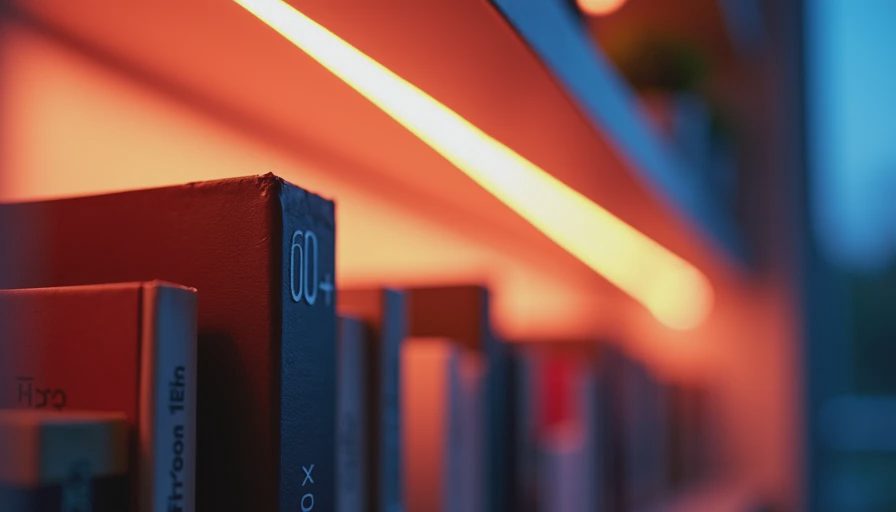
For most bookcase lighting, I reach for one of three setups: adhesive LED strips, battery puck lights, or a hardwired light bar. LED strips are the easiest way to get even light across an entire shelf run, and decent dimmable kits usually land somewhere around $25 to $60. Battery puck lights work well in rentals or for one special shelf, but they are better as accents than as the whole plan. Hardwired options cost more, often $200 to $500 once an electrician is involved, yet they look the cleanest in a long wall of built-ins. The important part is color temperature. Warm white, around 2700K to 3000K, keeps wood tones friendly and books from looking cold under a blue light. If the case has glass doors, a small interior strip keeps the contents from disappearing after sunset. That is where the room goes from bright to graceful. It also helps to choose a dimmable setup, because the right level at noon is usually not the right level after dinner. A shelf should fade with the evening, not fight it.
Make it feel built in, even when it is not
The prettiest bookcase lighting disappears into the architecture. That means hiding cords with paintable raceways, using adhesive clips so wires do not droop, and placing plug-in transformers where a basket or sofa table can hide them. If the shelves have a back panel, run the strip toward the front so the light washes down over the objects instead of disappearing behind them. A dimmer helps, even on a small setup, because evening light should feel like a murmur, not a work light. In a family room, I almost always dim the shelves lower than the lamps around them. It gives the room depth and keeps the books from competing with the television. If the shelf sits near a mirror, keep the beam soft so reflections do not bounce around the room like headlights. And if the bookcase is painted the same color as the wall, a little glow can make the whole wall feel taller and less heavy.
A few real-life setups that hold up
In a narrow hallway, a pair of shallow shelves can be lit with one continuous strip and a warm bulb in a nearby lamp. That makes the wall feel intentional instead of like storage left over from a move. In a nursery or playroom, bookcase lighting works best when the controls are simple: one switch, one dimmer, no complicated app you will resent at bedtime. In a living room, I like the bottom shelf to stay a little darker than the middle and upper shelves, because the eye lands there first and the room feels grounded. If you are styling with baskets, framed art, and a few real books, give each shelf one clear job. That is usually enough to make the whole case feel polished. A renter can often pull this together for under $100 with a plug-in kit, while a built-in refresh with an electrician and trim work can move into the low hundreds. For a lot of homes, that is a small price for a room that finally feels settled.
What I tell clients before they buy anything
Before you spend money on bookcase lighting, stand back at dusk and look at the bookcase from the doorway. Ask three plain questions: what should people notice first, where will the cord go, and do you want the shelves to glow all evening or just when you are home? If the answer is mostly books, choose even light. If the answer is objects you love, choose a small accent source and let the rest rest in shadow. And if you are stuck between too many choices, start simple. A warm plug-in kit and a dimmer solve more rooms than people expect. Good bookcase lighting should feel like a finishing touch, not another project. A soft room is a room that breathes. Let's make yours exhale.