Most people who say they are afraid of pattern mixing are not actually afraid of pattern. They are afraid of getting it wrong in public. They have seen the bold, high-contrast versions that look effortless in magazines and have concluded that the skill is binary: either you have the eye or you end up with a room that feels noisy and accidental.
The truth is quieter. Good pattern mixing is less about bravery and more about control. You do not have to use five patterns at full volume. You can use two or three with clear relationships and still get a room that feels layered and alive.
Start with one pattern you already trust
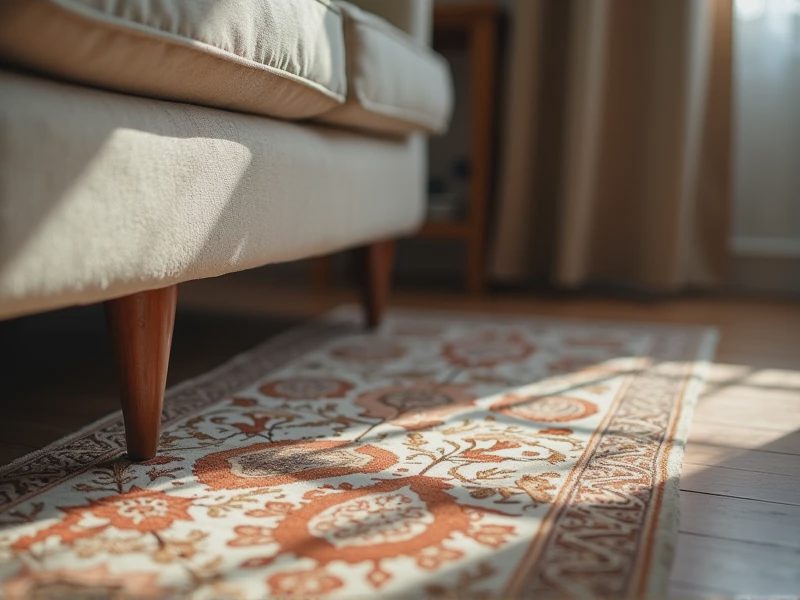
The easiest entry is not a blank room. It is a single pattern you already like and live with—a rug, a curtain, a pillow, even a favorite tablecloth. That pattern becomes the anchor. Everything else has to make sense next to it.
Look at what the anchor is doing. Is it large-scale or small? Geometric or organic? High contrast or soft? Once you can describe it in simple terms, you have the beginning of a conversation instead of a free-for-all.
The three quiet rules that keep things from unraveling
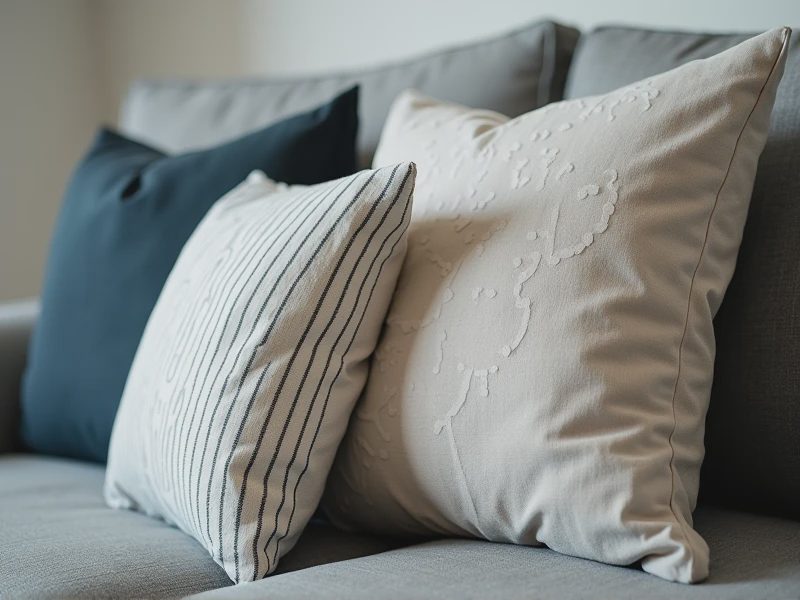
Scale. Pair a large pattern with a smaller one. Two large patterns in the same room often compete for the same visual space. A big floral or a bold geometric calms down when something finer sits beside it—a small check, a narrow stripe, a tight geometric, or even a textured solid that reads as pattern from a distance.
Value and contrast. Patterns that share a similar level of light and dark tend to sit more comfortably together than ones that jump dramatically in contrast. A soft, low-contrast print can live easily with another soft print. A high-contrast graphic usually needs partners that do not shout as loudly, or the room starts to feel like an argument.
Color family. You do not need matching colors. You need related ones. If your anchor pattern lives in warm neutrals with a bit of blue, the next pattern should be able to borrow from that same neighborhood. A completely new hue can work, but it asks more of you. Staying inside a shared temperature and a shared set of undertones is the safer and often more sophisticated path.
These are not laws. They are guardrails. Once you feel steady inside them, you can step over them on purpose.
Solids and textures are patterns too
One of the most helpful shifts is realizing that a solid fabric with a strong texture—a ribbed weave, a visible slub, a soft bouclé—functions as a pattern in the mix. It gives the eye a place to rest without creating a dead zone. Many people who fear pattern mixing are actually only afraid of printed pattern. Once they allow texture to count, the room becomes easier to balance.
A practical formula for the nervous: one clear print, one quieter print or stripe, and one textured solid. That combination is enough to feel considered and almost impossible to make chaotic.
How I test it without committing
I still use the Sunday swatch method. I pull the candidate fabrics and leave them on the table or drape them over the actual furniture for a day or two. I look at them in morning light and in the late-afternoon Lowcountry sun. I notice whether my eye keeps returning to the combination with pleasure or with a slight sense of effort.
If the mix feels like work to look at, it will feel like work to live with. If it settles and starts to feel inevitable, it is probably ready.
I also pay attention to where the patterns will sit in the room. A bolder pattern is often happier on something that does not move—a rug or a curtain—while smaller or softer patterns can live on pillows and upholstery that change position. This is not a rule, just a way to keep the more assertive elements from feeling restless.
Permission to stay simple
You are allowed to mix only two patterns and call it done. You are allowed to keep most of the room quiet and let a single patterned curtain or rug do the talking. Pattern mixing is not a requirement for a finished room. It is a tool. When the tool starts to feel like a test you are failing, put it down.
The goal was never to prove you can handle complexity. The goal is a room that feels layered enough to be interesting and calm enough to be restful. For many of us, that balance lives closer to restraint than to abundance.
A soft room is a room that breathes.
Pattern, when it is handled with a little care, is simply another way of letting it breathe in more than one direction.
— Caroline