Every July I have the same quiet argument with myself about linen. The humidity in Charleston climbs, the air gets heavy, and I watch clients reach for anything that promises to stay crisp. Performance blends. Tightly woven synthetics. Fabrics engineered never to wrinkle. Meanwhile the Europeans keep doing what they have always done: putting linen on beds, on sofas, at windows, and letting it look like itself.
I used to think that was a climate privilege. Then I started paying closer attention to how linen actually behaves in a Lowcountry summer, and I realized the privilege was mostly one of attitude.
What linen does in the heat
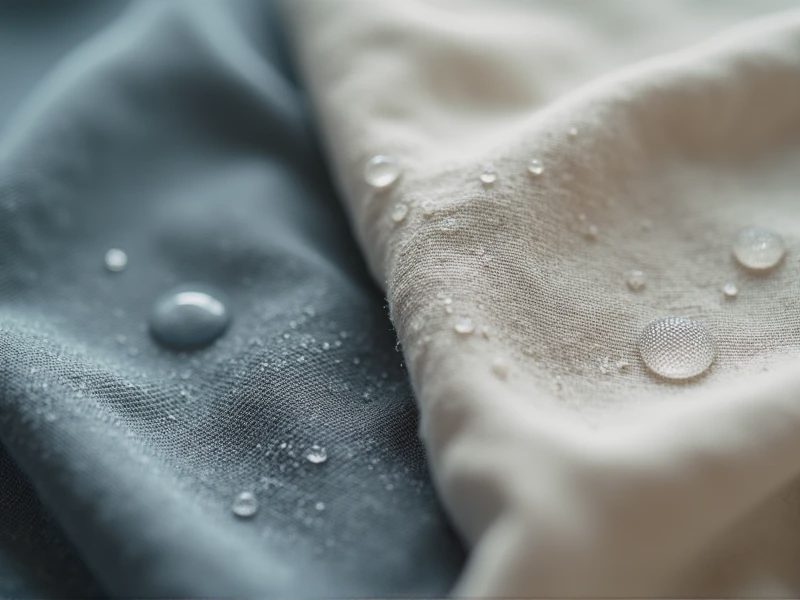
Linen is not trying to stay perfect. That is the point. It absorbs moisture and releases it. It moves air more willingly than most fabrics we ask to cover furniture and windows. It softens with washing and with wear instead of breaking down. In July, when everything else in the house can start to feel a little sealed and sticky, a linen curtain or a linen slipcover still feels like it is participating in the weather rather than fighting it.
Yes, it wrinkles. The wrinkles are not a failure of the textile. They are evidence that the fiber is responding to humidity and movement the way it was made to. A perfectly smooth synthetic in high summer often looks more unnatural than a gently creased linen that has been lived with.
I have watched this play out in our own house. The linen curtains in the living room shift and soften as the day heats up. The slipcover on the window-seat cushion takes on the shape of whoever sat there last. None of it looks undone. It looks honest.
The European logic
In places where linen has been ordinary for centuries, people do not treat wrinkling as a moral shortcoming of the fabric. They treat it as part of the material’s character. Sheets are linen because they feel cooler against skin. Tablecloths are linen because they improve with age. Upholstery and curtains are linen because the fabric has a weight and a breathability that synthetics still struggle to match without announcing themselves.
The difference is not that European summers are easier on fabric. The difference is that the culture around linen never decided that a lived-in surface was the same thing as a neglected one. We, on the other hand, have spent a long time being sold the idea that a good textile is one that never shows use. That idea is especially unhelpful in a climate like Charleston’s.
How I use it in July
I do not put linen everywhere. Some pieces in a family house need more resistance than linen wants to give. But in the places where touch and air matter most, I keep returning to it.
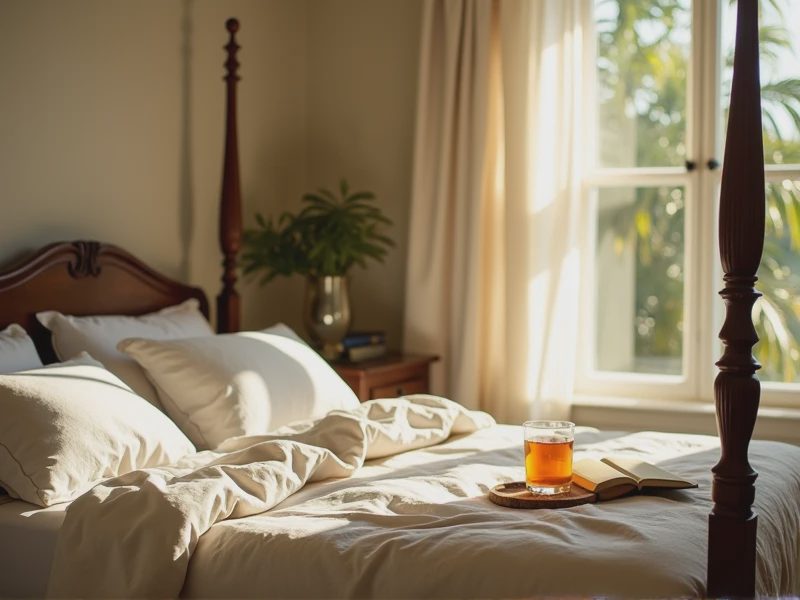
Curtains are the clearest win. A mid-weight linen filters the strong Lowcountry light without turning the room dark, and it moves when the air does. Slipcovers in linen or a linen-cotton blend can be washed when summer life demands it, and they look better after a few cycles than they did the day they were new. Bedding is an easy place to feel the difference immediately—linen sheets in July are one of the small domestic luxuries that actually earn the word.
I am careful about color. Very pale linens will show every spill and every bit of city dust. Mid-tones and soft, complex neutrals forgive more and still keep the cool quality that makes linen feel right in the heat. And I accept that a linen sofa cushion will never look as tailored as a tightly upholstered performance velvet. That is a trade I am willing to make for the way it feels at six in the evening when the house is finally quiet.
The real reason it works
Linen in July succeeds because it does not pretend the season is easier than it is. It does not try to stay hotel-smooth while the air is thick and the windows are open and children are moving through the rooms with popsicles. It participates. It softens. It shows the day a little.
Once you stop asking it to behave like a different fiber, the wrinkles stop reading as a problem and start reading as proof that the room is awake.
Europeans were not being romantic. They were being practical in a way that still looks beautiful. In a Charleston July, that practicality feels less like a foreign tradition and more like the most sensible thing in the house.
A soft room is a room that breathes.
In July, linen is one of the ways it keeps doing it.

— Caroline