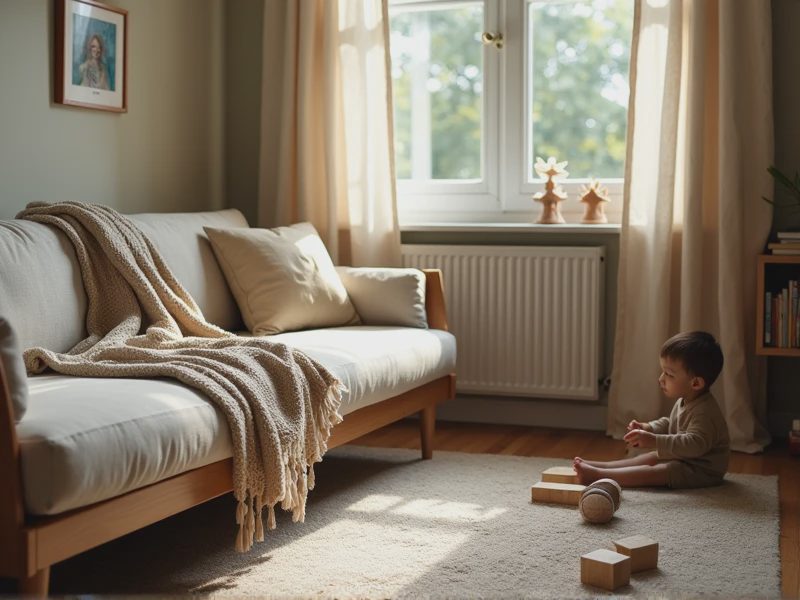
The first version of Lily’s playroom looked exactly like what I thought a designer’s child should have. Soft colors. Clever storage. A beautiful rug. A few well-chosen toys displayed like objects. It photographed nicely and felt slightly wrong the moment she started using it.
She didn’t want a curated space. She wanted a place that could absorb mess, noise, and the kind of deep play that does not care about visual harmony. The room I had made was still performing. It needed to stop.
What “doesn’t scream playroom” actually means
It does not mean erasing childhood from the room. It means refusing the visual language that announces, from the doorway, that this space is temporary, primary-colored, and separate from the rest of the house. Most playrooms fail because they are designed as containment zones rather than rooms that happen to hold play.
The goal is a space that can handle intense use without looking like it has given up on being part of the home. When the toys are put away (or at least corralled), the room should still feel like a place an adult would willingly sit and read. When the toys are out, it should feel alive rather than chaotic.
The decisions that changed it
We kept the good bones and removed the performance.
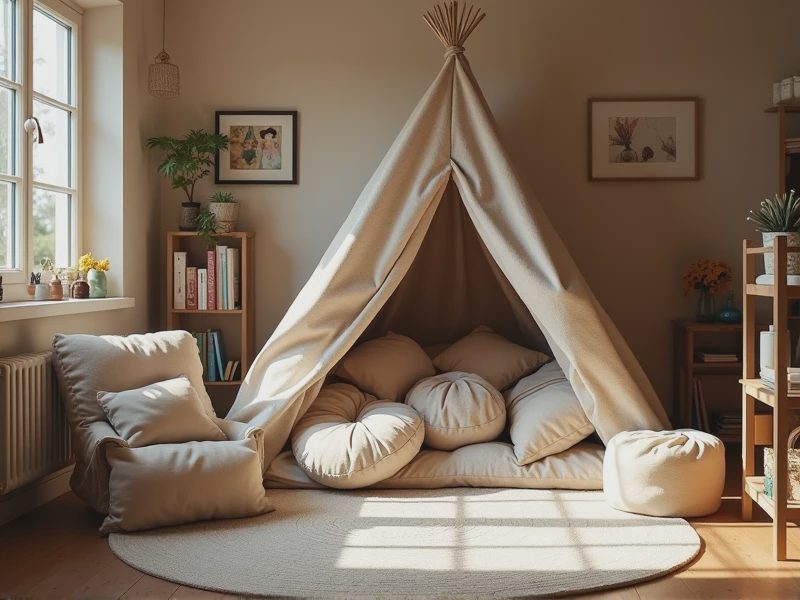
Storage became more honest and less precious. Open baskets and simple shelves replaced anything that required careful arranging to look right. If a system only works when it is perfectly maintained, it will not survive a six-year-old. The storage had to invite use, not demand tidiness as a precondition.
The rug stayed, but I stopped treating it like a showpiece. It is there to soften falls and define the main play area. It can take crumbs and marker and the occasional wet paintbrush. When it eventually needs to be replaced, that will be a reasonable cost of a room that is actually lived in.
Seating is low, comfortable, and not scaled only for children. A small sofa and a couple of floor cushions mean I can sit in the room without feeling like a visitor in a themed space. Lily can sprawl. James can read to her without perching. The room belongs to all of us, even if she is the primary resident.
Color went quieter. We kept warmth and a few clear notes of personality, but we stepped away from the bright, saturated palette that so many children’s rooms default to. The art is hers—real drawings, not framed illustrations chosen by me. The textiles can handle touch and spills. Nothing in the room is so delicate that play has to stop when it appears.
The soft-furnishing part
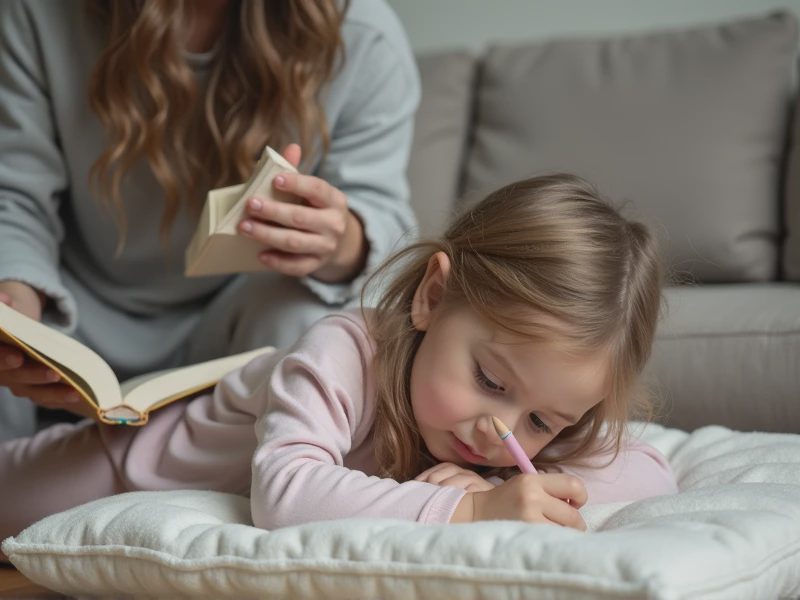
This is where my professional habits and my life as a mother meet most directly. The fabrics in a playroom need to forgive without feeling institutional. I look for tight weaves, washable covers where it matters, and textures that still feel good against skin. A performance fabric can be the right choice here, but only if it does not announce itself as “practical” at the expense of softness.
Pillows and floor cushions are working objects. They get pulled into forts, used as reading props, and occasionally turned into landing pads. They need to be comfortable enough to invite that use and resilient enough to survive it. I would rather replace a cover than live with something that is always being protected from the very activity the room exists for.
Curtains, if the room has them, should still filter light beautifully. There is no reason a playroom has to have the harshest light in the house. Soft daylight makes long afternoons of play feel better for everyone.
What I watch for now
The real test is simple. When I walk past the room and Lily is deep in some invented world, does the space support her or does it look like it is waiting for her to finish so it can be restored? When the toys are put away at the end of the day, does the room still have a pulse, or does it go flat?
A playroom that only looks right when it is tidy is not finished. A playroom that can only look right when it is tidy is a problem. The version that works is the one that can hold both states without apology.
We still have days when the floor disappears under projects. We still have evenings when everything is put back into the baskets and the room exhales. Both versions are allowed. Neither one has to perform for anyone else’s idea of what a child’s space should look like.
A soft room is a room that breathes.
The best playrooms breathe in both directions—toward mess and toward rest—without losing themselves in either.
— Caroline