
“Spill-proof” is one of those phrases that sounds like a solution and often becomes a compromise. I spent enough years specifying performance fabrics for clients with young children to know that the promise of invincibility can quietly cost a room its softness. The goal was never a house that could be hosed down. The goal was a house that could absorb ordinary life without looking punished for it—and without feeling cold while it waited for the next spill.
Forgiveness is a better word than proof. Some fabrics forgive. Others merely resist. The difference shows up in how a room feels on the days when nothing has gone wrong.
What forgiveness actually looks like
A forgiving fabric does three things well:
It accepts a certain amount of real life without permanent drama.
It can be cleaned or managed without special rituals.
It still feels good to touch when it is clean.
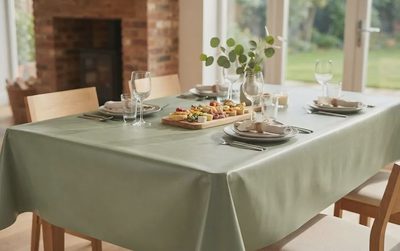
Many highly engineered performance textiles excel at the first two and fall short on the third. They repel, they wipe clean, and they often carry a faint synthetic hand or a way of reflecting light that keeps them from ever fully settling into a room. I still use them—especially on dining chairs, family-room ottomans, and anything that takes the most direct hits. I simply no longer ask them to do every job in the house.
The materials that earn their place
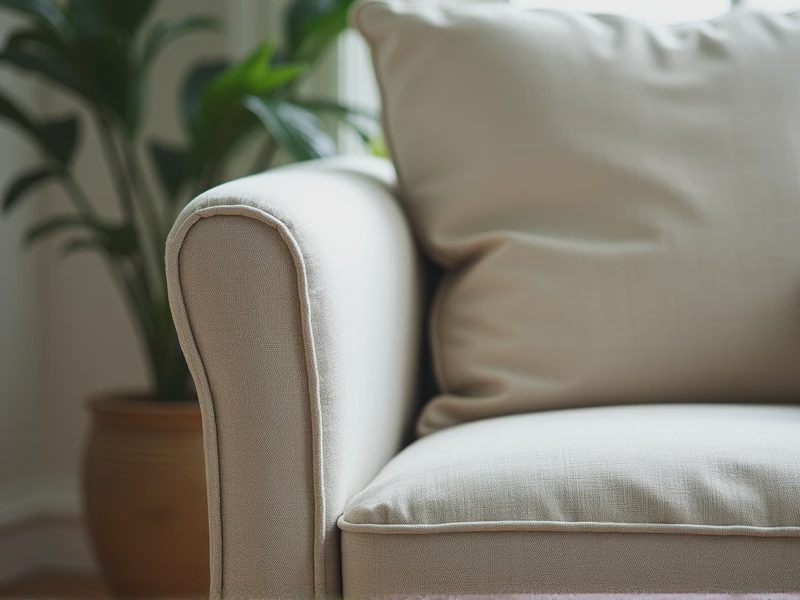
Tightly woven performance weaves remain useful where traffic and risk are highest. The better ones have improved in hand and appearance. I look for options that do not announce themselves as “practical” from across the room. If the fabric only looks acceptable until you sit on it, it has failed the daily test.
Solution-dyed acrylics can be surprisingly pleasant when chosen carefully. Some of the newer ones mimic the softness of cotton more successfully than earlier versions. They belong on pieces that live near snacks, art supplies, or open doors.
Washable slipcovers in cotton, linen blends, or sturdy canvas give you a different kind of forgiveness. The cover comes off. The spill leaves with it. The furniture underneath stays protected without forcing every surface in the room into performance mode. This is still one of the most practical strategies I know for family sofas and frequently used chairs.
Natural fibers with smart placement still have a role. A good linen or cotton velvet on a piece that is not the primary landing zone for snacks can bring back the softness that performance fabrics sometimes drain from a room. I protect the vulnerable spots and let the less vulnerable ones feel human.
Strategy over miracle textiles
The most effective “spill-proof” approach is rarely a single fabric. It is a system:
Put the most resilient textiles where the risk is highest.
Use removable covers on pieces that see daily use.
Keep throws in rotation so the primary upholstery is not the first surface everything lands on.
Choose colors and patterns that already contain a little visual complexity—small marks disappear more easily than on a flat, pale solid.
Accept that some evidence of life will remain, and decide in advance which pieces are allowed to age visibly.
This last point matters more than most people admit. A room in which every surface is trying to stay pristine tends to feel tense. A room that has decided which pieces will carry the marks of use—and which will stay more protected—feels calmer and more honest.
What we live with
In our house the family-room sofa wears a washable cover in a mid-tone performance fabric that still has some give. The dining chairs are tougher. The living-room chairs, which see less food and more conversation, are a cotton velvet that has already collected a few quiet stories. Throws move constantly. The window-seat cushion has a zipper for a reason. None of these choices make the house invincible. They make it livable without requiring constant vigilance or constant apology.
Lily knows which surfaces are for art projects and which are not. Fig has her preferred napping spots and the claw marks to prove it. The house absorbs both without giving up the feeling of softness that made us want these rooms in the first place.

The real measure
A fabric that only succeeds when nothing happens is not truly forgiving. A fabric that can take a spill, accept cleaning, and still feel pleasant on an ordinary Tuesday is doing the deeper work. Style in a family home is not the absence of evidence. It is the ability of the room to stay welcoming after the evidence arrives.
Choose materials that can recover. Arrange them so the highest-risk zones are protected. Then let the rest of the house feel like a place people are actually allowed to live.
A soft room is a room that breathes.
The most forgiving ones keep breathing even after the spill.
— Caroline